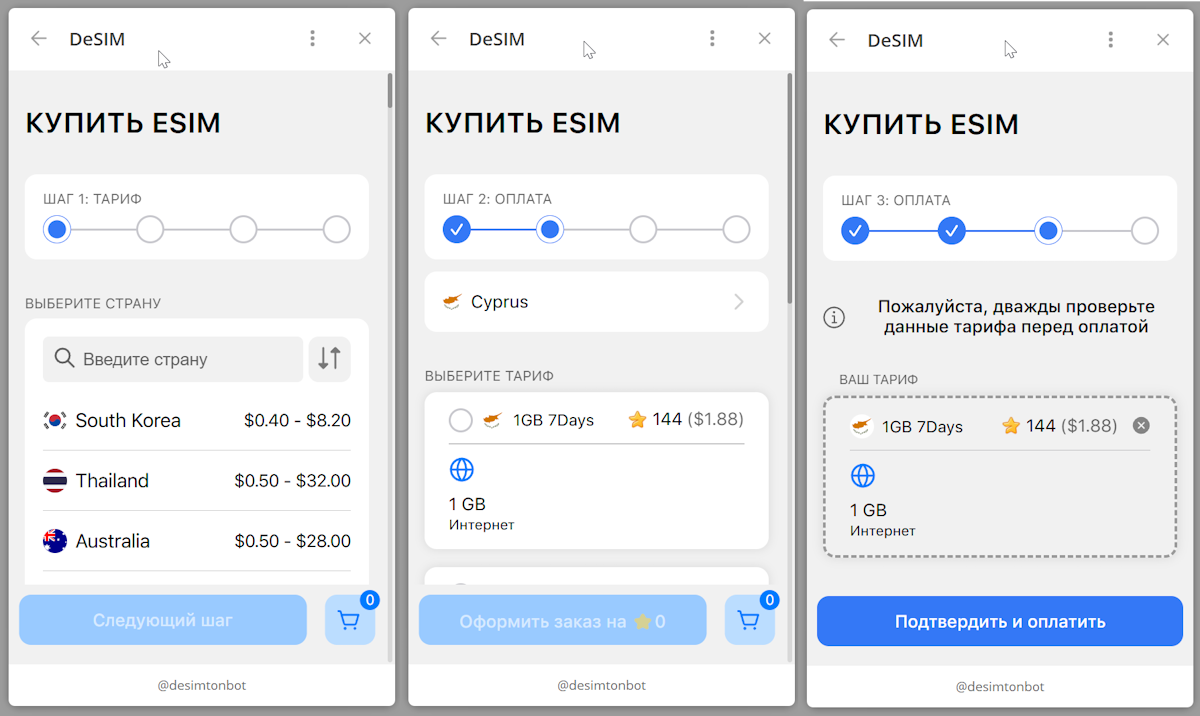
Stay Connected Anywhere Instantly With Your International eSIM
Tired of hunting for local SIM cards or racking up roaming fees when you travel? An international eSIM is a digital SIM card you download directly onto your compatible phone, letting you connect to local networks the moment you land. It allows you to activate a data plan from home before your trip, eliminating physical swapping and keeping you online instantly.
Why Travelers Are Ditching Traditional SIM Cards
Travelers are ditching traditional SIM cards for international eSIMs because they hate the hassle of swapping tiny plastic cards or hunting down foreign stores. With an eSIM, you land and instantly connect, keeping your home number active for 2FA codes. No more overpaying for roaming or juggling a second phone. Question: Why would I choose an eSIM over a local SIM? Answer: Because you can pre-activate coverage for 190+ countries in minutes—no queuing, passport scans, or losing your original nano-SIM in a hotel carpet.
The Hidden Costs of Roaming and Local SIM Hassles
Traditional roaming sneaks in unexpected daily fees for simply receiving texts, with charges that balloon after the first few megabytes. Buying a local SIM replaces that with its own hassle: hunting down a store, navigating foreign-language registration, and often being locked into a single-country plan at an inflated tourist price. Both options carry hidden surcharges that eat your budget before real data use even starts.
- Roaming: auto-billed daily passes activate even if you only use maps for five minutes.
- Local SIM: registration fees and mandatory top-ups for short trips waste money.
- Both: slow speeds or throttled data after small caps force expensive add-ons.
How Embedded SIM Technology Simplifies Connectivity Abroad
An embedded SIM means you never need to hunt for a local SIM card or pay roaming fees when you land abroad. Instead of swapping out your physical card, you simply purchase and activate a local data plan straight from your phone’s settings. This instant connectivity lets you hop between countries without changing hardware—your eSIM stores multiple international profiles, so switching networks takes seconds. Instant connectivity abroad becomes as easy as tapping a few buttons. How does an embedded SIM simplify switching between countries? It stores several regional plans at once, letting you activate a new local profile instantly without visiting a store.
Top Benefits of Using a Global Data Profile
A global data profile transforms your international eSIM into a single, seamless connection, eliminating the hassle of swapping physical SIMs across borders. You gain instant, reliable data access in multiple countries without juggling local plans or incurring unpredictable roaming fees. This means you stay productive the moment you land, with a stable connection for navigation, communication, and work. You maintain your primary number active for calls and texts while the global profile handles all your data needs, creating a clear cost barrier. However, success hinges on choosing a profile optimized for your specific travel routes, ensuring strong local network partnerships rather than just broad coverage claims. One simple activation powers your entire trip.
Instant Activation Without Visiting a Store
Forget waiting in line or hunting for a local SIM kiosk abroad. With a global data profile, you enjoy instant activation without visiting a store, turning your phone into a connected travel tool the moment you land. Simply scan a QR code or download the eSIM profile from your account before departure. Once your plane touches down at your destination, your device automatically connects to a local network—no physical stores, no language barriers, no wasted time. This immediate, store-free connectivity lets you hop off the plane and straight into ride-shares, maps, or messaging, all within seconds of switching off airplane mode.
Keeping Your Home Number While Using Local Data Plans
Using a global eSIM data plan allows you to keep your home number active on the primary line while consuming local data on the secondary eSIM profile. This setup, often called a dual-SIM configuration, ensures you remain reachable via your home number for calls and SMS, while avoiding roaming data charges. You can simply disable cellular data on your home line to prevent expensive overages, relying entirely on the local plan for internet access. This method preserves your two-factor authentication and contact reachability without sacrificing high-speed connectivity. The core benefit is complete number continuity without needing to swap physical SIMs.
Keeping your home number active while using a local eSIM data plan ensures uninterrupted reachability and avoids roaming costs through a simple dual-SIM setup.
Switching Between Carriers With a Few Taps
Switching between carriers with a few taps is a defining operational advantage of an international eSIM. Instead of physically swapping SIM cards, you access your device’s settings to deactivate one network and activate another, often within seconds. This process is entirely digital, relying on stored eSIM profiles. You can switch between a local data carrier and your primary global plan instantly, optimizing for coverage or cost without waiting for shipment or registration. Real-time carrier switching means you maintain connectivity by manually selecting the strongest profile as you move across borders.
Q: Can I switch carriers mid-session without losing data progress? A: Yes, because the eSIM profile stores your authentication credentials locally; switching simply re-establishes a data connection on the new carrier’s network, preserving active app states as long as the device remains online.
How to Choose the Best Plan for Cross-Border Travel

To choose the best international eSIM for cross-border travel, first audit your specific data needs based on trip length and usage—streaming and navigation require larger high-speed allowances, while messaging demands less. Prioritize plans with automatic network switching across your destination countries to avoid manual reconfiguration at borders.
A single-region plan often costs less than separate country eSIMs, but confirm it supports all your stopovers without roaming surcharges.
Verify the plan’s validity starts on your day of departure, not activation, to prevent wasted days. Finally, check that the eSIM includes a local number option if you need calls for ride-sharing or reservations; otherwise, data-only plans suffice for app-based communication.
Regional vs. Worldwide Coverage: What Fits Your Itinerary
Choosing between regional and worldwide coverage hinges entirely on your specific itinerary. A regional eSIM, covering zones like Europe or Southeast Asia, is perfect if you’re staying in one geographic cluster—cheaper per MB and simpler to manage. For a multi-continent trip (say, Japan, then Brazil), a cross-border travel eSIM with worldwide coverage saves the hassle of swapping plans mid-journey. The deciding factor is border crossings: if you only cross one or two related borders, regional wins; if your route skips between continents, go global.
| Coverage Type | Best For | Key Limitation |
|---|---|---|
| Regional | Single-zone trips (e.g., EU, ASEAN) | No coverage outside predefined region |
| Worldwide | Multi-continent itineraries | Higher per-GB cost |
Data Allowance, Speed Tiers, and Fair Usage Policies
When selecting an international eSIM for cross-border travel, scrutinize the fair usage policies for data allowance, as many plans throttle speeds after a specific high-speed cap. Speed tiers often separate “unlimited” plans into 4G/LTE access until a soft cap, then drop to 256 kbps or lower. Always verify if your chosen eSIM offers a fixed data pool versus a daily allowance, as the latter resets but may impose stricter per-day speed limits. A plan with a generous soft cap and operator-grade throttling (e.g., 1 Mbps) provides superior reliability for navigation and messaging versus aggressive “fair use” limits that cripple connectivity.
Data Allowance dictates total usable bytes, Speed Tiers define performance before throttling, and Fair Usage Policies enforce transfer limits to prevent abuse, directly impacting cross-border connectivity.
Compatibility Check: Which Devices Support This Technology
Before selecting an international eSIM plan, you must confirm device Compatibility Check for eSIM support. First, verify your smartphone’s model list—most iPhones from XR onward and recent Google Pixels (3a and later) support eSIM. For Samsung, models S20 series and newer, plus Z Flip and Fold devices, are typically compatible. Use your phone’s settings to
- Navigate to “Cellular” or “Mobile Data”
- Select “Add eSIM” or “Add Data Plan”
- Scan the provider’s QR code. If this option appears, your device passes the check.
Avoid assuming compatibility based solely on brand; always verify via official carrier databases or your phone’s IMEI status before purchase.
Comparing Popular Providers for Roaming Freedom
When comparing popular providers for roaming freedom with international eSIMs, prioritize coverage breadth over price per gigabyte. Airalo offers extensive regional packages ideal for multi-country trips, but its data-only plans require VoIP for calls. Holafly excels with unlimited data in single regions and includes a local number, making it superior for communication-heavy travel. Ubigi delivers competitive rates for high-speed data in specific tech-forward markets like Japan or Europe, though its global zones are limited. For continuous roaming across continents, GigSky provides reliable, albeit pricier, global coverage with strong carrier redundancy.
Your choice hinges on whether you need broad geographic coverage (Airalo), integrated voice (Holafly), or targeted high-speed performance (Ubigi); no single provider leads in all three.
Always verify device compatibility with each network’s APN settings before departure to avoid activation delays.
Airalo vs. Holafly vs. GigSky: Pricing and Perks
Airalo leads on budget-friendly, data-only plans with regional packages starting as low as $4.50, but lacks unlimited options. Holafly counters with unlimited data perks across 160+ destinations, though daily throttling and higher base Singapore eSIM prices apply. GigSky sits between them, offering competitive per-MB rates for short trips and unique multi-country corporate plans, but its local coverage gaps can raise costs. Holafly’s unlimited model suits heavy streamers, while Airalo’s a la carte pricing favors light users seeking precise control. For travelers, the core trade-off is stark: pay-as-you-go flexibility versus predictable, if capped, unlimited access.
- Airalo: cheapest regional bundles (e.g., Asia 1GB for $4.50) but no unlimited tiers.
- Holafly: unlimited data for fixed days (e.g., Europe 7 days for $35), but video streaming throttled to 480p.
- GigSky: dynamic per-MB pricing (often $0.05/MB) with no unlimited plans, ideal for occasional bursts.
eSIM for Business vs. Leisure Travelers
For business travelers, eSIM plans prioritize reliable global connectivity for professionals, offering priority data speeds and multi-line support to maintain work calls and cloud access across time zones. Leisure travelers benefit from flexible, cost-effective packages, often with streaming-friendly data caps. To choose correctly, follow this sequence:
- Assess your need for uninterrupted video conferencing versus casual browsing.
- Compare provider tiers: business plans bundle static IPs or VPNs, while leisure plans emphasize regional passes.
- Select a plan allowing instant top-ups for urgent work, not just fixed data buckets.
Short-Term Plans vs. Long-Term Subscriptions
When choosing an international eSIM, the core trade-off is between short-term plans and long-term subscriptions. For a single trip, a short-term regional data pack offers simplicity and zero commitment. However, for frequent travelers, long-term subscriptions provide superior cost efficiency over time. To decide, follow this sequence:
- Estimate your total roaming days across the next year.
- Compare the per-GB cost of a one-time short-term plan against a monthly subscription’s auto-renewal rate.
- Look for pause features in long-term subscriptions—vital for skipping inactive months, unlike rigid short-term plans.
Short-term plans excel for sporadic use; long-term plans dominate for regular, multi-country roaming.
Step-by-Step Setup Guide for First-Time Users
A first-time international eSIM setup is straightforward. Start by confirming your device is unlocked and eSIM-compatible. Purchase a plan from a reputable provider, ensuring it covers your destinations. You will receive a QR code or manual activation code via email. On your phone, navigate to Settings > Cellular/Mobile Data > Add eSIM, then scan the QR code or enter the details. Label the line (e.g., “Travel Data”) and set it as your default for data, keeping your primary line for calls and texts if desired. Enable data roaming for the eSIM, and you will connect upon arrival. Q: What if scanning the QR code fails? A: Manually enter the SM-DP+ address and activation code provided in your confirmation email, which works identically. Test connectivity before departure by disabling your primary line briefly.
Scanning a QR Code or Downloading an App
To activate your international eSIM, you typically scan a QR code or download a provider’s app. After purchase, the eSIM QR code activation is emailed or displayed; open your phone’s settings, select “Add Cellular Plan,” and scan the code. Alternatively, download the provider’s app, log in, and tap “Install eSIM.” The profile downloads automatically. Installation requires a stable Wi-Fi connection.
Q: Can I scan the QR code from a screenshot?
A: Yes, most devices allow scanning from a saved image, though direct screen scanning is more reliable.
Managing Dual SIMs: Primary and Secondary Networks
When you travel, your phone can juggle two lines at once. Set your home SIM as the primary for voice and SMS, but switch your data to the eSIM for roaming. This keeps your local number active while you browse on the international plan. You’ll need to assign your eSIM as the default data line for roaming in your phone’s cellular settings. Q: Will calls to my home number still come through? A: Yes, just enable “Allow Cellular Data Switching” so voice calls don’t interrupt your data session on the eSIM.
Common Activation Pitfalls and How to Avoid Them
A frequent pitfall is installing the eSIM before your departure, which can prematurely activate the data timer. Avoid this by scanning the QR code only after arriving at your destination. Another common issue is forgetting to disable your primary home line’s data roaming, causing conflicting network registration. To prevent this, manually toggle off data roaming for your primary line in your SIM settings. Also, ensure your device is unlocked; a carrier-locked phone will reject the international eSIM profile. Finally, a weak initial internet connection can stall profile download—use a reliable local Wi-Fi upon arrival.
- Install the eSIM only after reaching your destination to prevent early activation.
- Set data roaming to “off” for your primary home line before switching to the eSIM.
- Confirm your phone is carrier-unlocked before purchasing or scanning the eSIM code.
What Happens When You Cross Borders Multiple Times
Crossing borders multiple times with an international eSIM triggers seamless, automatic network handoffs, but your connection may briefly stutter for 10–30 seconds as the profile re-registers on a local carrier. Roaming fatigue never happens because the eSIM treats each new country as its primary zone, eliminating the need to swap physical cards or hunt for local SIMs. A key insight:
Your data history resets with each border; there is no cumulative throttling across countries, only fresh, high-speed access per nation.
However, dual active lines (home + eSIM) can cause call forwarding confusion if you don’t disable the primary line, leading to missed calls while the eSIM focuses on data. For frequent crossers, preloading multiple country profiles in one eSIM ensures zero downtime between borders.
Auto-Switching Networks and Coverage Drops
Auto-switching networks in an international eSIM attempt to maintain connectivity as you cross borders, but coverage drop troubleshooting becomes essential. When moving between countries, the eSIM may momentarily disconnect while it scans for the strongest local partner network. This can cause a brief loss of data services, especially if the device struggles to register quickly with a new carrier. Switching from one network to another often takes longer if both countries share fringe border coverage areas. To minimize disruption, your device must support seamless network scanning without manual selection. Frequent border crossings multiply these momentary drops, leaving you without connection for a few seconds each time the network changes.
Preventing Unexpected Charges in Non-Covered Regions
When your eSIM lacks coverage in a country, preventing unexpected charges requires proactive steps. Before crossing a border, disable automatic network selection and data roaming for that specific eSIM profile. Use only Wi-Fi or a local secondary eSIM for connectivity. Many apps cache maps and messages, so download these offline in advance. The moment you enter a non-covered region, your device might latch onto expensive partner networks; lock it to Airplane Mode or remove the eSIM from active profiles until you reach a covered zone.
Q: How do I stop accidental data use in non-covered regions? A: Toggle off “Data Roaming” for that eSIM in your phone settings and set a zero-balance warning. Never rely on auto-connect—manually verify network selection each time you cross a border.
Tips for Cruises, Train Journeys, and Remote Areas
For cruises, a ship’s maritime network is unreliable and expensive; instead, activate a cruise-specific eSIM plan that works via satellite when out of port. On multi-country train journeys, your signal jumps between towers, so pre-download offline maps and purchase a regional eSIM covering all stops to avoid re-activating at each border. In remote areas like mountain passes or deserts, choose an eSIM that partners with local ground towers, as roaming fails without consistent coverage. Prioritize eSIMs with manual network selection to lock onto a stable provider when signals flicker between countries.
- Switch your eSIM to airplane mode between train tunnels to prevent automatic carrier hunting that drains battery.
- Set cruise eSIM activation to begin at your departure port, not mid-voyage when data charges spike.
- For remote stretches, carry a backup physical SIM from a local operator if the eSIM fails to connect.
Security and Privacy Considerations on Foreign Networks
When using an international eSIM on foreign networks, your primary security concern is data interception over unfamiliar infrastructure. Unlike your home carrier, foreign networks may have weaker encryption standards or questionable logging practices. Always disable automatic network selection to choose a trusted local operator manually, preventing connection to potentially malicious, spoofed towers. Your eSIM’s profile itself is safer than a physical SIM, as it cannot be physically cloned, but the over-the-air provisioning process remains a vector if the eSIM provider uses unencrypted management portals. Crucially, treat any foreign network as an open environment; use a VPN for all sensitive traffic, especially on public Wi-Fi fallback. Avoid storing payment credentials in apps that rely solely on the eSIM’s connection for authentication.
Data Encryption and VPN Integration
When using an international eSIM, your data is already encrypted between your device and the tower, but adding a VPN wraps that traffic in another layer of security. This double encryption tunnel keeps your browsing, passwords, and messages private from prying eyes on unfamiliar foreign networks. A good VPN integrated with your eSIM prevents hackers at airport Wi-Fi or hotel hotspots from reading your data. You get seamless protection without slowing things down, as modern protocols handle the overhead efficiently.
- Activates military-grade encryption for all app traffic over the eSIM connection
- Hides your IP address, so local networks cannot log your real location or browsing habits
- Prevents ISP throttling of specific services while roaming overseas
- Ensures secure split-tunneling for work apps versus personal browsing
Risks of Public Wi-Fi vs. Cellular Connection

Public Wi-Fi networks, often unencrypted, expose data to packet sniffing and man-in-the-middle attacks, making credentials and emails vulnerable. In contrast, an international eSIM’s cellular connection offers encrypted tunneling directly from your device to the carrier, bypassing shared hotspots. Even password-protected hotel Wi-Fi can be spoofed by a rogue access point, whereas cellular’s dedicated channel resists such interception. For eSIM users, the key risk differential is that Wi-Fi requires trust in an unknown router, while cellular’s infrastructure is operator-controlled.
Q: Why is public Wi-Fi riskier than cellular for eSIM data?
A: Public Wi-Fi lacks end-to-end encryption by default, allowing nearby attackers to intercept traffic; cellular’s authentication and encryption are built into the protocol stack.
Provider Transparency in Data Logging
When using an international eSIM, provider transparency in data logging is critical for your privacy. You must verify exactly what metadata (e.g., connection timestamps, IP addresses, browsing domains) the eSIM provider records and retains. Before purchasing, demand a clear data retention policy—reputable providers log only billing details and immediately delete session data after your trip. Zero-log services guarantee no connection history is stored. Avoid providers that vaguely promise “anonymity” without specifying logging practices.
- Check if the provider logs your visited websites or just connection durations.
- Confirm whether data storage occurs on your device or their cloud servers.
- Ensure the provider publishes a transparent privacy policy with specific retention periods.
- Verify if logging is disabled entirely for native data users.
Future Trends in Cross-Cloud Mobile Connectivity
Future trends in cross-cloud mobile connectivity will see international eSIMs seamlessly federating multiple cloud providers, dynamically switching carrier profiles without user intervention to maintain optimal latency. This enables real-time data prioritization across distributed nodes, so a roaming user’s video call routes through the least congested cloud backbone, not the nearest local tower. Your device will autonomously negotiate service-level agreements between cloud networks, bypassing traditional roaming tiers entirely. As a result, cross-cloud eSIM management will eliminate manual downloads, instead pre-loading virtual profiles that self-update based on geolocation and network load. The user simply stays connected—the cross-cloud intelligence handles failover, speed optimization, and cost governance in the background.
The Rise of Infinite Data Plans and AI-Optimized Routing
Infinite data plans through eSIM are becoming real, with AI-optimized routing making them viable worldwide. Instead of throttling after a cap, your connection hunts the best local network in real-time, ensuring smooth streaming or work calls without juggling multiple SIMs. This shift means your phone’s data consumption gets dynamically balanced across carriers you can’t even see, preventing sudden slowdowns at borders. AI-optimized routing is the brain here—your eSIM learns travel patterns, pre-switching to lower-latency paths before you notice congestion. Think of it as your connectivity autopilot for infinite data.
Q: How does AI prevent my infinite data plan from becoming unusably slow in a crowded foreign city?
A: It continuously scans available partner networks, instantly routing your traffic through the least congested cell tower and backbone, so you maintain high speeds even during peak hours.
Integration With Smartwatches and IoT Devices
International eSIMs are converging with cross-cloud mobile connectivity to unify smartwatch and IoT device management. Your wearable can now autonomously tether to a local network via a single global profile, eliminating phone dependency. IoT sensors, from asset trackers to health monitors, seamlessly switch between cloud providers based on latency or cost. This architecture decouples the device’s eSIM from a primary handset, enabling a smartwatch to maintain its own international data plan while a connected thermostat uses a separate, low-power IoT profile—all orchestrated through unified cloud-based provisioning.
How 5G Standalone Networks Will Change Roaming
With 5G Standalone networks, international roaming via your eSIM will feel more like being local. These networks use a native 5G core, meaning you directly connect to a host network overseas instead of bouncing through 4G infrastructure. This cuts latency dramatically for real-time tasks like live navigation. The biggest shift is that your phone keeps its secure, ultra-fast connection when crossing borders, rather than struggling with slower fallback networks. 5G standalone roaming also enables smarter traffic routing, so your eSIM profile switches seamlessly between countries without manual network selection.
- No more delay when landing—your eSIM activates on a high-speed 5G core immediately.
- Better support for latency-sensitive apps like HD video calls or remote work tools abroad.
- Your eSIM can maintain carrier-grade security and speed from one country to the next.
What Exactly Is a Global eSIM and How Does It Work?
Breaking Down the Technology Behind a Digital SIM Card for Travel
How Your Phone Connects to Local Networks Without a Physical Card